Office fever?

This week the number of people with COVID in the UK seems to have exploded. About 5m, or 1 in 13, apparently have active COVID cases. It does seem as if everyone knows someone under the weather.

With so many being folks ill, it is of course having an impact. Many people are off work, with even flights being cancelled and with the getaway for the Easter holidays starting it has frustrated many plans.

But closer to home it is also impacting the contact centre industry. Reports of increasing absences and the pressure on service levels have been becoming louder, and certainly mentioned more often in many conversations.

With restrictions being largely been lifted it is not, I suppose, a surprise really. With lower levels of hospitalisation and mortality, I suppose this could be the beginning of us just starting to live with the virus. It does still seem to have come all in one big rush mind you.

Of course, the difference we have between now and before is our ability to work remotely. Most of us have done it, many of us are still doing it and this is now presenting new challenges.

If you are interested in finding out what others are doing, back in the office, what strategies they have, how has this changed, you can get access to our dashboard by completing the survey (anonymously if you wish) at the link below.

Hybrid/Remote working survey: An update

To work or not to work?

With the new variant appearing, for most, to be milder in symptoms, we also now have a conundrum. To we carry on working, pushing through COVID, or not?

In my own case, I felt ill, but not really ill enough to completely stop, and yet not really well enough to run at full speed.

Admittedly on day 3, I got bored and in the modern world of not wanting to fall behind, did peck away at emails, having odd calls to try to keep things moving.

In all honesty, looking back, I am not sure how effective it was… brain fog was certainly an issue… yet I did it because I could.

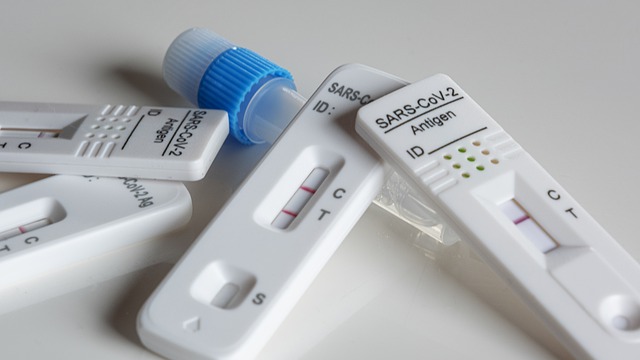
With my lateral flow tests angrily blinking positive (I mean it was so solid I could have drawn it in with a sharpie) for over 10 days it was most certainly a good thing for everyone else I was not in an office and working remotely. Staying out of circulation meant I could not give it to anyone else.

But what about those in Operations and contact centres, without the luxury of flexibility I have had.

In a contact centre you can typically self certify off ill for 5 days, needing a doctor’s note beyond this. Yes, these days you may be able to work remotely, however, it is one thing doing the odd email, something else completely talking with customers all day… do need you to be top of your game for every call.

With furlough stopped, no more free lateral flow tests and guidance to return to work if you feel okay, there is now pressure to be back with a lack of visibility over who is still infectious, yet returning to the office and maybe not performing at their peak.

Of course, also remember the situation pre COVID, where we all used to go into the windowless office, with that stinking cold, dosed up on Sudafed.

Hindsight is 20-20

In hindsight, it was not great, and goodness knows how many more people we all infected. Fortunately, there is a better way (remote work) and we now have the tools and habits to make this more likely to work.

Staying at home, working remotely, increasing flexibility around working hours (working in short bursts) and trying to re-allocate lighter duties all seem sensible. Indeed, some of the newer WFM tools and techniques can plan around this extra complexity too. We are in a better position now than we have been if we do it right.

Of course, you would hope we have learnt… although it is not convincing as yet, to whether we have… we will see how this one pans out.

If you have experience of working through COVID, returning to work too early, or suggestions on new ways of working to manage, let us know in the comments.

Have a good week everyone.
Posted in Opinion | Comments Off on Office fever?

New approaches to testing

It seems like lots of people have come down with COVID this week, probably more than I have noticed before. Maybe this was, just my psychological bias, mind you, as I also came up double red on the Lateral Flow Test too (the Baader-Meinhof phenomenon I believe, if you like this stuff).

It has all been a bit of a bother. I was planning on being at Credit Week, had a full day session booked on Thursday, client work and video recording on Friday… everything now cancelled.

And, since the start of the week, I have now been shuffled off to the spare room, isolating to try to avoid infecting anyone else, and seemingly only able to slink out of the shadows when everyone is out of the house.

The good news to report though is that the LFT tests really do seem to work. An extra line appeared, was really clear, so at least we know. And, so now I am stuck in the room, waiting to feel better and the line to disappear. A new sense of jeopardy every morning as to whether I go outside to play

So far I seem to have been lucky healthwise, some fever, sore throat, slight cough, but manageable, albeit tired. The big problem I have noticed though is psychological, boredom.

Remote working and student living – again

Is it we are so used to rushing around these days or maybe just the consequence of working remotely that it seemed all a little too easy to slip into pecking away at a few emails here, having the odd conversation there, a quick meeting and before you know it 3/4 of a day had passed, and the opportunity to get the rest you now realized you needed.

Not that I have seemed to have learnt… gradually over the week, the spare room has acquired a table, the laptop, phone chargers… all I need now is a kettle, fridge and pot noodles and I will be back to full student living… and I am really not sure that is a good thing.

Affordability data

Still, the little extra time I was given back did allow me to follow the UK chancellor’s (finance minister) spring statement, primarily focused on softening the blow from the expected affordability crisis.

5p off fuel duty and changes to tax limits were the headlines. With tax cuts being money in the pocket for earners, the fuel cost reduction was to help with transport, but with the thinking, this will also flow through to other items using energy, such as food.

All of this got me thinking about the data again (not a surprise I know). What do people spend money on, how much exactly and does this change by how much you earn?

Unsurprisingly the data is available on the ONS website, and with time on my hands, I was able to look at it via the interactive graphic below.

What is clear (to my interpretation, at least from this data) is if you are in the lower 30-40% of income earners, you are having to top up your income with benefits or debt to balance the books.

And, as prices go up, assuming income or benefits does not, this gap becomes wider.

So the question from the changes we have now is… are the measures sufficient to moderate this impact and if not (and I fear not) what will happen next and what do we need to do to help?

Playing our part to help?

Outside of regular cost efficiency (to help more customers), forbearance plans and options (for support), being proactive and having some honest conversations with customers about products, affordability, and outcomes is going to be key… this could be a big shock for many any we may need to think outside of other existing toolsets to help… including addressing some of these bigger questions.

… so maybe the consumer duty is arriving in the nick of time… and getting ready now will help!

Hopefully, I will be back to full strength next week… for everyone else stay safe and if you are also off ill, get well soon.

Have a good weekend (in the sun) everyone.

Posted in Opinion | Comments Off on New approaches to testing

Black holes with ideas

One of the many benefits of attending talks, and conferences I realized this week, is the connections they make. Discussions, sometimes in completely different areas, can magically join up to spark new ideas and insights. Sometimes in unexpected ways.

Conference catch up

As an example this weekend I have been catching up on the New Scientist Live discussions from Manchester the week before (I admit it, I do like a bit of science discussion).

One talk was at the minuscule level – the Muon g-2 experiment at Fermilab. New results could point to the discovery of new physics which could explain some of the missing matter in the universe…

The other was on a huge scale – black holes. It seems that Black holes, mathematically at least, could be portals to infinite spaces within them. An entire additional universe could be inside one apparently.

So my mind was buzzing, are we all living inside a black hole, infinitely devisable in space and time, and does this now explain some of the missing matter in the universe?…. Somehow, tantalizingly, the two talks seemed linked…

Cross-Pollination

Now, I know people much brighter than me are working on this topic already (it is a pretty big topic in Physics already), but in my own universe, it did serve to illustrate the value of listening to multiple talks, on multiple topics, back to back in a forum such as a conference. It can really help to spark ideas and new ways of understanding.

This week of course is also Credit Week, with the Credit Summit on Wednesday. The following week (and in a shameless plug), we have the Online Lending Technologies Think Tank. So we are not short for similar events to spark our imagination.

The last few days I have been debating whether to go on Wednesday (££), although I will, of course, be there next week at the Credit Connect event and I am thinking about how can we shake up the conversations to spark ideas for folks. Any extra ideas, topics, or suggestions, let me know in the comments below.

Tangential ideas

A related thought on this topic was from a comment made in a conversation about Income & Expenditure, on contact rates.

Outside some I&E capture tech, which I did find pretty impressive on many levels, the comment was made in passing, that contact attempts are about how you spark interest in the customer in speaking with you.

I know we know this, but it also sounded very much like marketing, which set me thinking about which marketing techniques could we also use to trigger customers to engage and talk with us?

The collections solutions pipeline

Collections can be considered a sales and marketing process, We have heard this before. But maybe it could also, more accurately, be broken down as follows

  • Getting in contact – a marketing process, to generate interest in engaging
  • Finding the right support solution – a sales process to help customers navigate support solutions
  • An operational fulfilment process to make sure the solution selected actually works well.

So what can we learn, from these established processes, from other industries?… digital marketing techniques, the use of data, A/B testing, message personalization, SPIN Selling, Conceptual Selling, Customer-Centric Selling, Lean Management, Six Sigma, Agile… we don’t necessarily have to re-invent the wheel, there is a lot there already.

Well, that solves my reading list for next week… certainly something to think about.

Maybe see some of you on Wednesday… but certainly do sign up for the following week!

Have a good week everyone.

(Post note, a final comment on affordability crisis. Martin Lewis has just said this is going to be an absolute rather than relative poverty issue in the UK. I share his concerns on the potential size of the impact we could see and while his point was it could be so significant we may run out of tools to help, the government needs to step in, we also do need to get ready to help support customers, maybe at volume… our processes need to be robust and ready and we need to prepare)

Posted in Opinion | Comments Off on Black holes with ideas